
A Complete Guide to Choosing the Best Calendar Design for Business Use
A business calendar is more than just a tool for checking dates. When it is thoughtfully designed, it can become a useful part of your brand’s everyday communication.
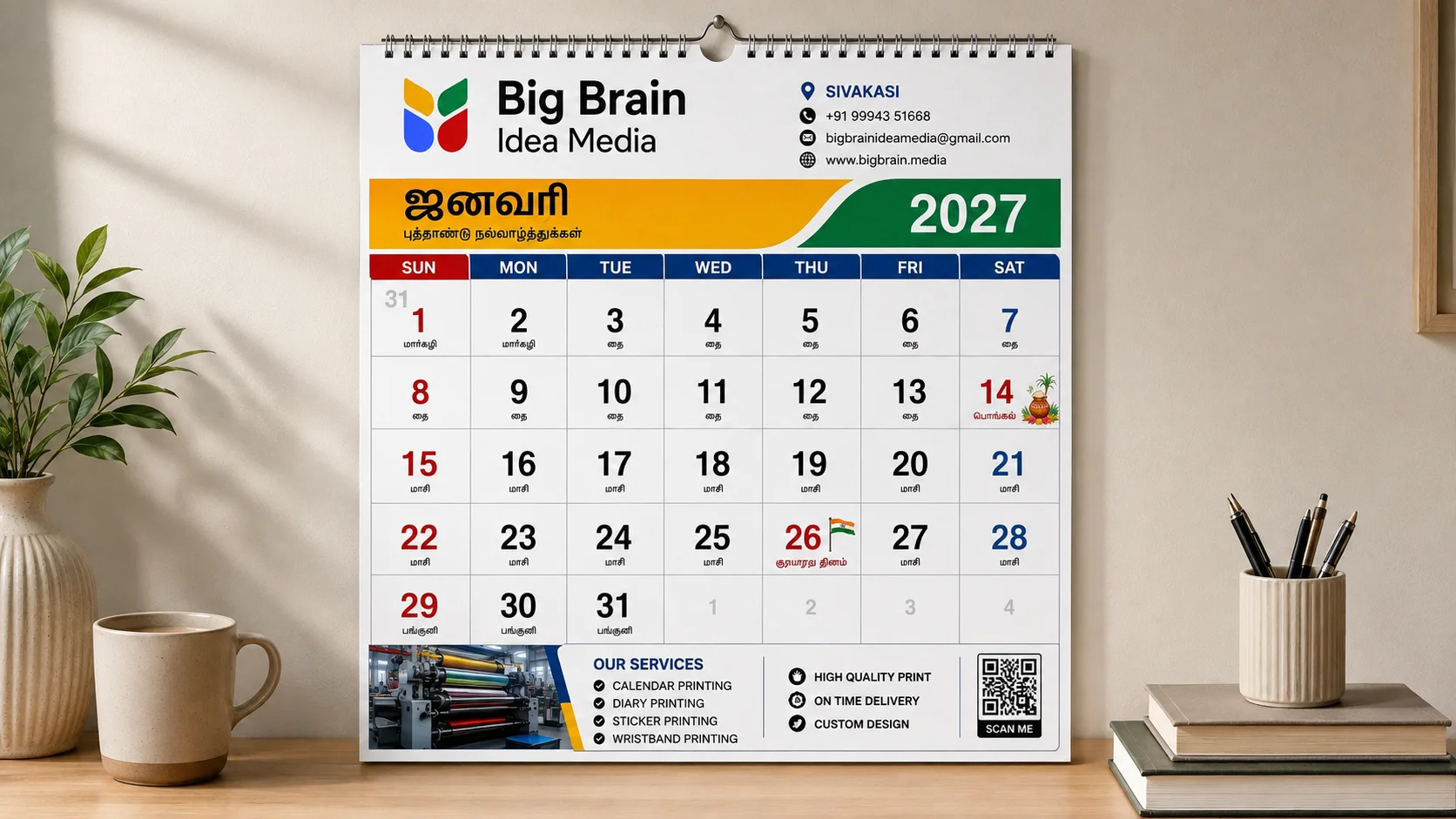
Customers, employees, suppliers, and business partners may look at a calendar many times throughout the year. Therefore, choosing the right design, size, paper, and printing style can make a noticeable difference.
For businesses, a well-planned calendar can also work as a simple and practical branding tool. Instead of creating something that people use only for a short period, you can design a calendar that stays visible for several months. As a result, your company name, logo, contact details, and brand message can remain in front of customers throughout the year.
However, selecting the right calendar design is not always as simple as choosing a beautiful template. Different businesses have different requirements. A retail store may need a colorful promotional design, while a corporate office may prefer a clean and professional appearance. Similarly, schools, hospitals, manufacturers, distributors, and service providers may need completely different layouts.
This guide explains the important factors to consider before selecting a calendar design for your business.
Why Does Calendar Design Matter for Businesses?
A calendar is something people naturally keep on their desks, walls, reception areas, homes, or workplaces. Because of this regular visibility, it can provide your business with an opportunity to stay connected with customers.
For example, a calendar can include your company logo, phone number, website, address, social media details, and other important information. In addition, you can highlight special offers, important dates, product information, or seasonal promotions.
More importantly, the design should be useful rather than simply attractive. If the dates are difficult to read or the layout feels crowded, customers may not want to use it. On the other hand, a clean and practical design can encourage people to keep the calendar for the entire year.
Therefore, businesses should focus on usability, readability, branding, and visual appeal when planning their calendar.
Choose a Design That Matches Your Brand
The first step is to understand your brand identity. Your calendar should look like it belongs to your business rather than appearing like a generic printed product.
Start with your brand colors and logo. Then, select fonts and images that match the overall style of your company. For instance, a professional service company may benefit from a simple layout with balanced colors and minimal graphics. In contrast, a retail or food business may prefer brighter colors and product-focused visuals.
At the same time, avoid adding too many design elements. Excessive colors, multiple fonts, large graphics, and too much text can make the calendar difficult to read.
Instead, maintain a clear visual hierarchy. The month, dates, important information, and branding should each have their own space. Consequently, customers can find the information they need without confusion.
Select the Right Calendar Format
The format you choose should depend on where and how customers are expected to use the calendar.
A wall calendar is a popular option for offices, shops, homes, and reception areas. It provides a larger space for branding and allows users to see the month easily.
Desk calendars, meanwhile, are useful for offices and workspaces. They can sit next to a computer or on a reception desk, keeping your business visible during everyday activities.
Monthly calendars are another useful option because they provide a clear view of each month. Businesses can use them to showcase different products, services, locations, photographs, or promotional messages throughout the year.
For businesses that want a more personalized approach, custom monthly calendar printing allows the layout, images, colors, and branding elements to be planned according to specific requirements.
Think About the Size Before Printing
Size plays an important role in both appearance and usability. A calendar that is too small may not provide enough room for dates and business information. Similarly, a very large design may not be practical for every location.
Before finalizing the design, think about where the calendar will be used.
For example:
- Small sizes can work well for desks and compact workspaces.
- Medium sizes are suitable for offices and reception areas.
- Larger formats can be effective for walls and promotional displays.
Furthermore, consider the amount of information you want to include. If your design contains product images, contact details, promotional messages, and a large date grid, you may need more space.
Therefore, the size should be selected according to both the design and the intended use.
Make the Monthly Layout Easy to Read
A calendar has one primary purpose: helping people check dates quickly. Consequently, readability should always come before decoration.
The date numbers need to be large enough to read comfortably. At the same time, there should be sufficient spacing between the days. Weekends and important holidays can also be highlighted where appropriate.
Additionally, avoid placing images or text directly over the date grid. Such elements may look creative, but they can reduce readability.
A good monthly layout gives users a clear visual path. They should be able to identify the month, week, date, and important information within a few seconds.
Because of this, simplicity often works better than an overcrowded design.
Use High-Quality Images
Images can make a business calendar more attractive. However, the images should have a clear purpose.
A manufacturing company could showcase its products or production process. A restaurant might use food photography. A travel company can feature destinations, while a real estate business may display properties.
Similarly, businesses can use twelve different images for twelve months. This approach keeps the calendar visually interesting throughout the year.
However, low-quality images can make even a professionally printed calendar look ordinary. Therefore, always use high-resolution images that are suitable for printing.
Also, make sure the images match your brand. Random stock photos may not communicate your business identity effectively.
Add Branding Without Overdoing It
Branding is an important part of business calendar printing. Nevertheless, your company should not dominate every section of the design.
Your logo can be placed in a consistent position, such as the top section or bottom area. Contact details can also be added in a clean format.
For example, businesses may include:
- Company logo
- Website address
- Phone number
- Email address
- Social media handles
- Business location
- QR code
A QR code can be particularly useful because it can direct customers to your website, product page, social media profile, or enquiry form.
As a result, the calendar becomes more than a printed item. It can also create a connection between offline marketing and online communication.
Consider the Paper Quality
Paper selection can influence the overall appearance and durability of a calendar. The right paper depends on the type of calendar and the printing method.
For example, businesses may choose different paper thicknesses based on whether the calendar is intended for wall display, desk use, or promotional distribution.
A suitable paper should provide good print clarity and enough strength for regular handling. Moreover, images should appear sharp and colors should reproduce accurately.
Before ordering a large quantity, it is a good idea to check a physical sample. This allows you to see how the colors, images, text, and paper work together.
Choose the Right Finishing Options
Finishing can give the final printed calendar a more polished appearance. Depending on the design and budget, businesses can consider different finishing options.
For example, lamination can provide additional surface protection. It can also improve the overall look and feel of the printed material.
Likewise, binding options should be selected according to the calendar format. Wire binding, spiral binding, and other suitable methods can make monthly pages easier to turn.
However, finishing should support the purpose of the calendar rather than unnecessarily increasing the cost. Therefore, choose options based on durability, usability, and appearance.
Plan Your Content for All Twelve Months
Another important consideration is the content you want to show throughout the year.
Instead of repeating the same image and message every month, businesses can create a simple theme. Each month can highlight a different product, service, achievement, customer message, or business activity.
For instance, a printing company could showcase different printing products across the twelve months. Similarly, a clothing business could feature seasonal collections.
In addition, businesses can highlight important occasions and relevant dates. However, avoid filling the calendar with too much promotional text.
The best approach is to keep the information useful while allowing the branding to remain visible.
Think About Your Target Audience
Before designing the calendar, ask one simple question: Who will use it?
A calendar created for office employees may have different requirements from one distributed to customers. Likewise, a calendar designed for schools may need academic dates, while a business serving international customers may require additional holiday information.
Understanding your audience helps you make better decisions about:
- Design style
- Calendar size
- Color selection
- Images
- Information
- Language
- Layout
- Printing quantity
As a result, the final product becomes more relevant and useful to the people receiving it.
Why Custom Calendar Printing Can Be Useful
Standard templates may be convenient, but they often provide limited flexibility. Businesses that want their calendar to reflect their own identity can consider custom calendar printing.
With a customized design, you can decide how the logo, images, dates, colors, contact information, and promotional content should appear.
Furthermore, businesses can select the format, size, paper, binding, and finishing based on their requirements.
This flexibility is particularly useful when the calendar is being distributed as a promotional item. Instead of giving customers a generic calendar, your business can provide something that represents your brand.
Plan Your Printing Quantity Carefully
Quantity is another factor that businesses should consider before placing an order. Printing too few calendars may result in additional orders later, while printing too many can lead to unnecessary inventory.
Start by estimating how many customers, employees, dealers, suppliers, and business partners you want to reach. Then, keep a small additional quantity for future requirements.
Additionally, planning your order early can give you enough time for design approval, sample checking, printing, finishing, and delivery.
Therefore, avoid waiting until the last minute, especially when calendars are required for a specific season or promotional campaign.
Check the Design Before Final Printing
Once the design is ready, review every detail carefully before sending it for printing.
Check the spelling of the company name, phone numbers, website URL, email address, social media details, dates, and other important information.
Also, examine the logo quality and image resolution. Make sure there are no unwanted gaps, alignment issues, or missing elements.
Most importantly, check whether all twelve months are correct. A small mistake repeated across a large number of printed calendars can become expensive to fix.
For this reason, always approve the final proof before starting bulk printing.
Final Thoughts
Choosing the best calendar design for business use requires more than selecting an attractive template. A successful calendar should combine good design, clear information, strong branding, practical usability, and suitable printing quality.
From choosing the right format and size to selecting paper, images, finishing, and branding elements, every detail can influence the final result. Furthermore, understanding your target audience can help you create a calendar that people genuinely want to keep and use.
A thoughtfully planned custom monthly calendar can remain visible throughout the year while quietly reminding customers about your business. When the design is useful and the branding is balanced, it can become a practical part of your marketing strategy rather than just another printed product.
If you are planning to create calendars for your business, start by defining your audience, purpose, design style, quantity, and budget. Once these elements are clear, choosing the right printing format becomes much easier. With the right planning and professional printing, your business calendar can provide value to customers while keeping your brand visible month after month.


